
Our Innovation
Transforming Geothermal Energy with Quantum Nanotechnology and AI
01 —EQG
Enhanced Quantum Geothermal Platform
GEIOS's patented Enhanced Quantum Geothermal (EQG) system represents a paradigm shift from traditional single-output geothermal plants to carbon-negative, multi-product energy infrastructure.
Revolutionary Radiogenic Heat Technology
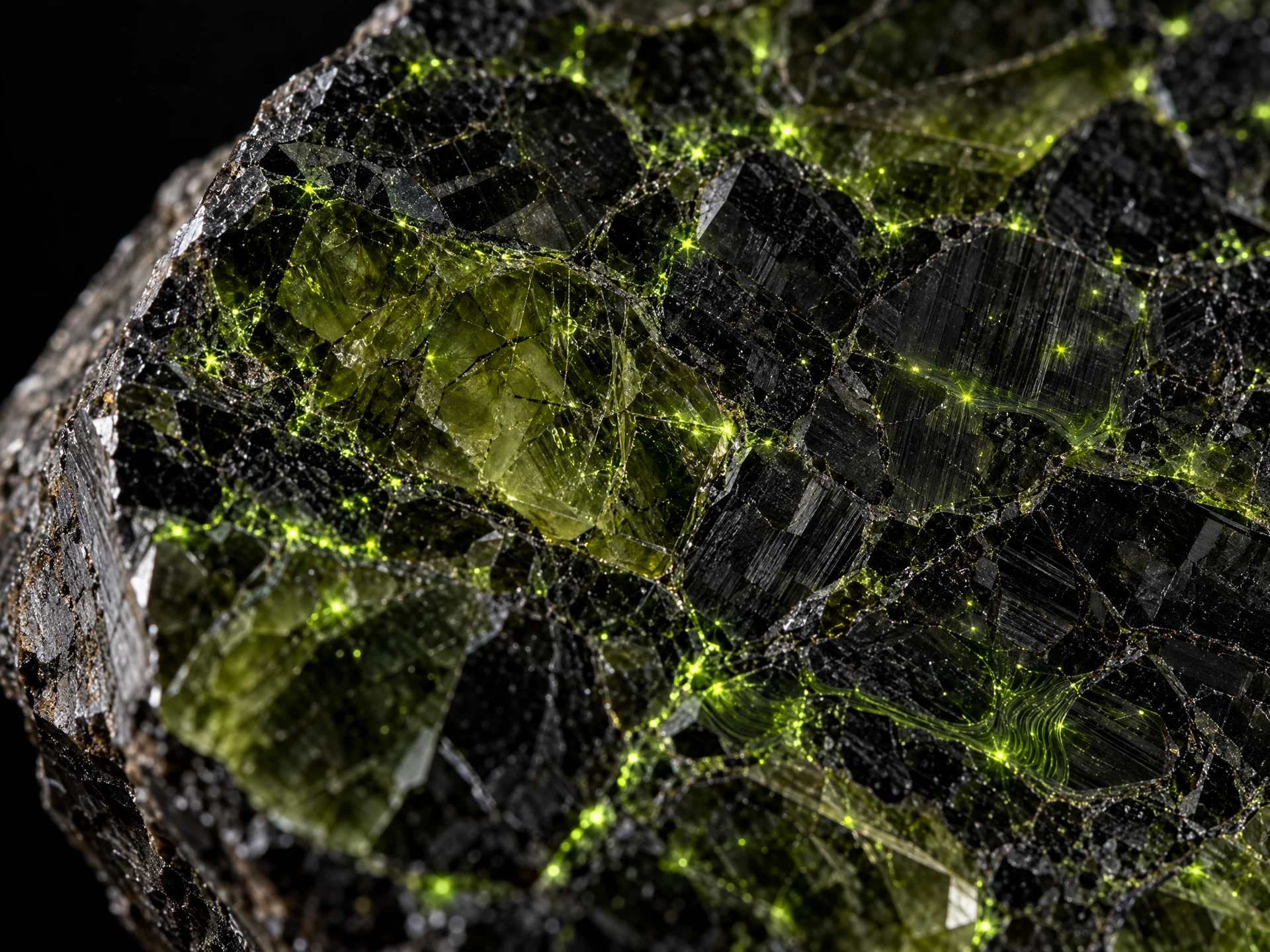
Unlike conventional geothermal systems that target hot rock only or water resources in metamorphic rocks, our platform harvests using nanotech advanced materials, the radioactive decay of elements through alpha-beta and gamma. We highly focus only on radiogenic heat generation from ultra-mafic crystalline sub-basement formations—tapping into Earth's long life battery reservoir powered by crystallographic radiogenic heat and radioactive decay.
- Continuous Energy Production
- Radioactive decay generates continuous radiogenic heat, delivering thermal energy
- Ubiquitous Resource Base
- Ultra-mafic crystalline formations give more access to Earth's subsurface using radiogenic heat, making this technology globally deployable
- Long Life Battery Reservoir
- Radiogenic heat processes provide predictable energy with half-lives exceeding 1 billion years
- Superior Longevity
- 30+ year operational life vs. 10-15 years for conventional hydrothermal systems
Operational life comparison
02 —Well cluster
Breakthrough Technology Architecture
- 01
Dual-Depth Configuration
Production wells (3,500m) targeting radiogenic heat zones with precision engineering
- 02
Dual-Geocasing Technology
Proprietary nanostructured casings with enhanced borophene and silicon carbide nanoparticles for superior thermal conductivity and structural integrity
- 03
Multi-Thread Layout
Centralized pad with a 10-well multi-thread array, each well enabled for dual-mode injection and heat capture by the new permanent geocasing. The design expands effective heat-transfer surface, stabilizes flow, and boosts uptake via hybrid nanofoam interfaces and an NPC Chamber that concentrates phonons for thermo-acoustic nano-scale heat transfer.
- 04
Radiogenic Heat Targeting
Uranium/thorium-rich ultra-mafic crystalline formations providing continuous, predictable energy generation
03 —The constraint map
What Conventional & "Advanced" Geothermal Typically Cannot Do
Conventional hydrothermal and many "advanced" variants (EGS/AGS) remain constrained by geology and materials. They're largely limited to rare hydrothermal systems or to non-stimulated rock that depletes quickly under production. Standard casings, cements, and liners exhibit low interfacial heat-transfer coefficients and minimal phonon coupling, so even with high gradients the wellbore heat flux saturates early. Chemical fouling (notably silica), corrosion, and flashing add parasitics and downtime. Where stimulation is used, induced seismicity risks complicate permitting and social license.
Economically, bespoke, site-specific development plus uncertain production trajectories make it hard to consistently undercut wind/solar on LCOE or to compete with gas on system-level cost once flexibility and bankability are priced in—even though gas turbines have higher CAPEX/OPEX than ORC/steam islands. Scale-out is slowed by specialized rigs, long permitting, and non-modular EPC. Thermal drawdown and short-circuit flow paths erode asset life, making sustained 30+ years at nameplate uncommon without major reinvestment.
01Access most of the crust›
02Harvest radiogenic heat directly›
03Maintain high heat-flux at the wellbore›
04Avoid rapid thermal drawdown›
05Operate with stable chemistry›
06Achieve multi-product outputs›
07Guarantee zero-seismic operations›
08Be clearly cost-competitive›
09Deploy fast and modularly›
10Deliver grid-friendly flexibility›
11Sustain 30+ year life at nameplate›
How GEIOS answers
GEIOS positions to overcome these limits via non-extractive, dual-mode injection/capture, enhanced interfacial physics (hybrid nanofoam + NPC Chamber), and phonon/thermo-acoustic heat transfer, targeting broader siting, higher stable heat flux, multi-product outputs, and carbon-negative operation.
04 —System
Revolutionary System Architecture
Our system features a revolutionary Geocasing design, paired with a high-performance nanofluid, a next-gen neo-nanovault heat exchanger, and the first AI-powered Large Action Model (LAM).
- 01
Revolutionary Geocasing Design
Paired with a high-performance nanofluid heat exchanger for optimal thermal transfer
- 02
Next-Gen Neo-Nanovault Heat Exchanger
Advanced thermal management system achieving 96% efficiency
- 03
AI-Powered Large Action Model (LAM)
Redefining heat extraction, energy conversion, and plant management with real-time optimization
Conceptual cutaway · Select a numbered component
3,500 m · Ultra-mafic crystalline
Production wells (3,500 m) targeting radiogenic heat zones. Uranium/thorium-rich ultra-mafic crystalline formations providing continuous, predictable energy generation.
05 —Since the 1970s
Breaking the 50-Year Barrier: Geothermal's Quantum Leap
Since the 1970s, geothermal energy has struggled to reach its full potential, hindered by material limitations, inefficient heat transfer, and high costs. Unlike solar, wind, and other industries that were transformed by nanotechnology—slashing costs by 80-90% while boosting efficiency—geothermal remained stagnant, trapped in outdated methods.
Today, GEIOS—a U.S./Korea-based innovator—is rewriting the story of geothermal energy.
By integrating patented nitrogen hybrid nanofoam gas, quantum-enhanced directional wells, and AI-driven systems, we've redefined geothermal energy.
Our innovations deliver 20x more power per well at a fraction of the cost, while preserving reservoir integrity and ensuring sustainable operations.
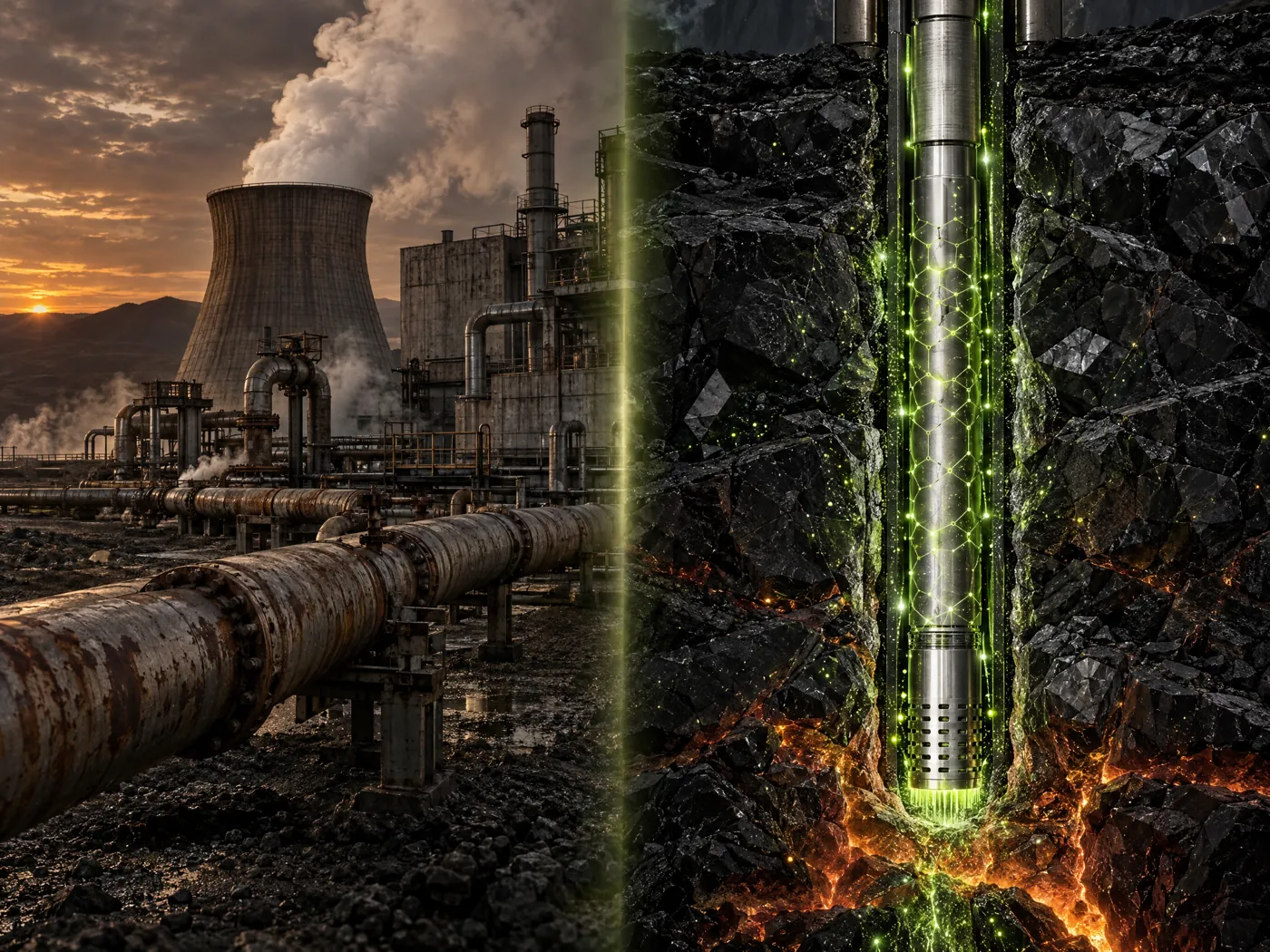
Geothermal stalls on materials, heat & cost
Cost cut nanotech brought to solar & wind
More power per well with GEIOS
06 —Macro to Micro Innovation
Our Cutting-Edge Innovations from Macro to Micro for Geothermal Applications
What sets GEIOS apart from competitors is our unique approach to geothermal technology, integrating macro-scale engineering with micro and nanoscale innovations.
Our proprietary nano-enhanced materials, nitrogen-based nanofoam, and advanced geothermal coatings revolutionize heat transfer efficiency, reservoir stability, and energy extraction, making GEIOS the leader in next-generation geothermal solutions.
 Reservoir scale01
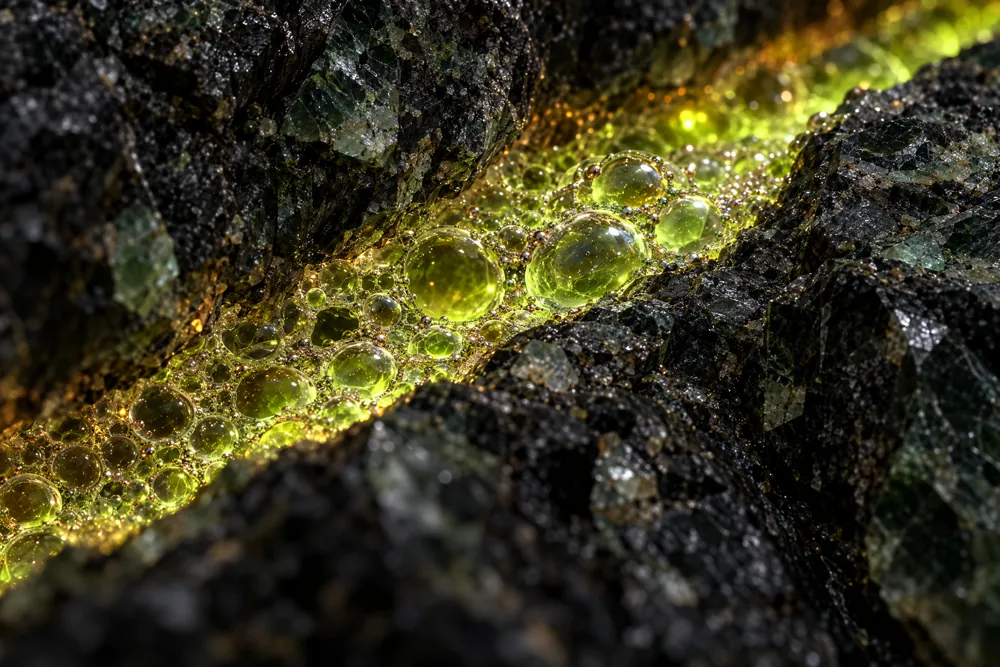
Geothermal Nitrogen Nanofoam
Our Nanofoam technology is designed for Quantum-Enhanced Geothermal (EQG) systems, replacing costly proppants by enhancing heat transfer, fracture stability, and reservoir efficiency through nitrogen gas injection.
Utilizing nanoparticle reinforcement, this innovation ensures long-term geothermal performance, superior flow dynamics, and sustainable energy extraction in GEIOS EQG applications.
 Well structure02
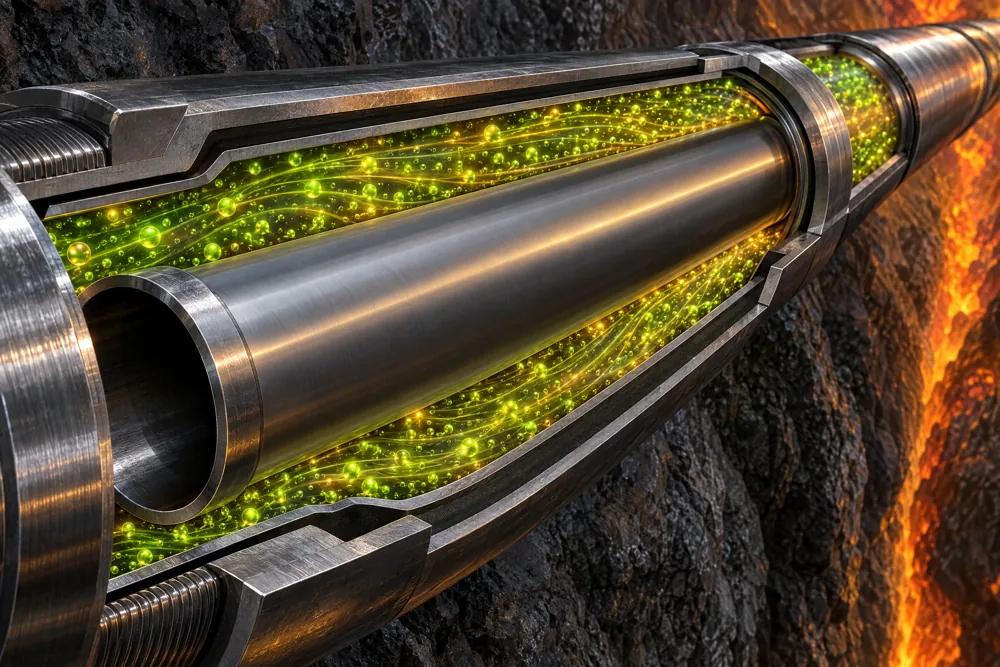
GPIM Nanofluid for GEIOS EQG Geocasing Structure
Our GPIM Nanofluid technology is engineered for geothermal energy systems, improving heat transfer efficiency while preventing scale formation and corrosion in deep well structures.
Leveraging advanced ion-based stabilization mechanisms, this innovation enhances reservoir longevity, operational safety, and energy output.
 Equipment surface03
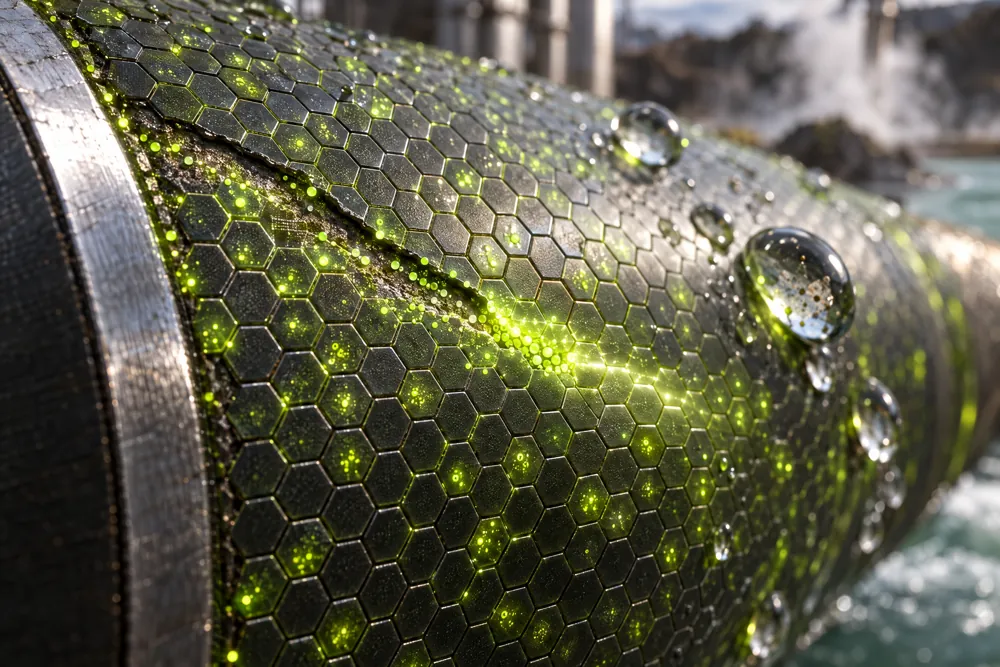
Next-Generation Nanocoating for Enhanced Geothermal Systems
This next-generation nanocoating is specially developed for Enhanced Geothermal Systems (EGS), reinforcing pipes and equipment against abrasion, chemical degradation, and scaling.
The inclusion of self-healing CeO₂ nanoparticles provides long-term durability while ensuring optimal thermal performance and extended equipment lifespan.
square meters · lab + manufacturing
NANOGEIOS, in collaboration with KAIGEN, demonstrates our comprehensive expertise in nanotechnology and the manipulation of structures at the angstrom scale.
Our state-of-the-art nanotechnology laboratory and manufacturing facility spans 5,420 square meters, integrating cutting-edge research, sustainable manufacturing, and advanced quality control systems to develop innovative metamaterials, nanofluids, and components through our proprietary patents.
07 —Our Power Plant's Brain—Fully Autonomous, Always On, Always Optimizing
AI-GMS: The First AI-Native Platform with LLM and LAM
for Total Autonomous Power Plant OperationsAI-GMS (Artificial Intelligence for Geothermal Management Systems) is the first AI-native platform designed with LLM and LAM combined to operate GEIOS power plants with total autonomy—eliminating the need for on-site operators.
Built on advanced LLM (Large Language Models) and LAM (Large Action Models), AI-GMS dynamically controls every aspect of plant operation—from injection pressure and flow rates to thermal output, nanomaterial system response, and power dispatch—in real time.
The system continuously learns from well data, adjusting operations to optimize efficiency, increase yield, and extend reservoir life.
Replacing Manual Oversight with Intelligent Automation
By replacing manual oversight with intelligent automation, AI-GMS reduces OPEX, lowers LCOE, and transforms each GEIOS plant into a self-regulating, smart energy platform.
Integrated natively with SPARC Nanofoam, NanoVaults, and the GEIOS modular plant architecture, AI-GMS represents the future of fully autonomous, AI-driven geothermal energy.

- 01
World's First AI-Powered System for Quantum-Enhanced Geothermal
AI-GMS is the world's first AI-powered mining and operations system specifically engineered for quantum-enhanced geothermal, built on LLAMA 3.3 70B.
- 02
Seamless Integration
Integrated with GEIOS' Quantum Well Architecture, NanoVault heat exchangers, and SPARC Nanofoam subsurface technology for complete system harmony.
- 03
Precision Optimization
Leverages real-time well data and deep reinforcement learning for millisecond optimization of injection, temperature, flow, and thermal conductivity.
- 04
Enhanced Performance
Advanced predictive modeling boosts plant efficiency by up to 40%, reduces OPEX, and extends reservoir life through intelligent optimization.
Up to40%efficiency - 05
Adaptive Intelligence
Adapts and improves with every operational cycle, transforming each installation into an evolving smart energy platform.
Advanced AI-GMS Features
LSTM neural networks
Predictive Analytics
AI-GMS leverages advanced LSTM neural networks to forecast energy demand and reservoir dynamics. The system monitors grid behavior and downstream power consumption patterns, intelligently reducing extraction and power output during low-demand periods—maximizing efficiency and preserving reservoir health in real time.
Zero-Cost Deployment for Qualified Geothermal Sites
Train with Us. Operate Smarter. Scale Globally.
- 1
No Upfront Cost
AI-GMS is offered free of charge to geothermal plants meeting GEIOS's criteria, enabling partners to deploy a fully autonomous AI system with zero upfront investment.
- 2
Continuous AI Training
Integration with real-world geothermal environments continuously trains AI-GMS's proprietary LLM and LAM Epoch Engine, enhancing predictive accuracy and control.
- 3
Mutual Benefits
Partners benefit from advanced automation, reduced LCOE, and real-time optimization, while contributing to the evolution of AI-native geothermal operations.
Ready to transform your geothermal operations?
Join the future of fully autonomous, AI-driven geothermal energy.
Talk to the team
Experience the Future of Geothermal Energy
Learn how GEIOS technology can revolutionize your energy infrastructure.